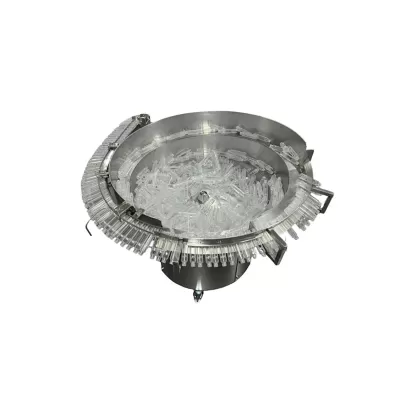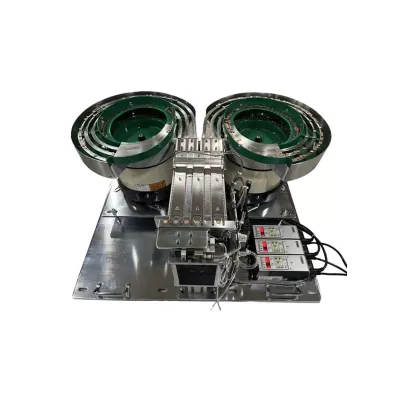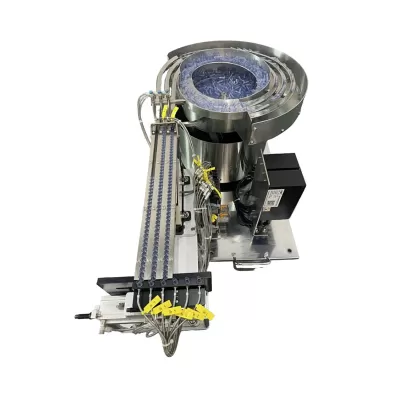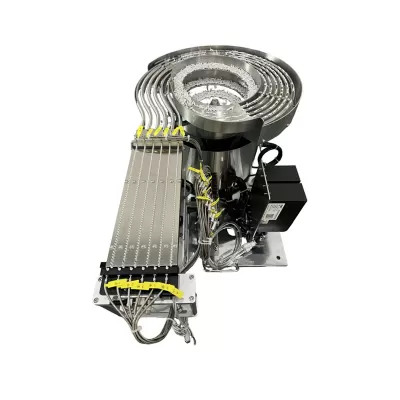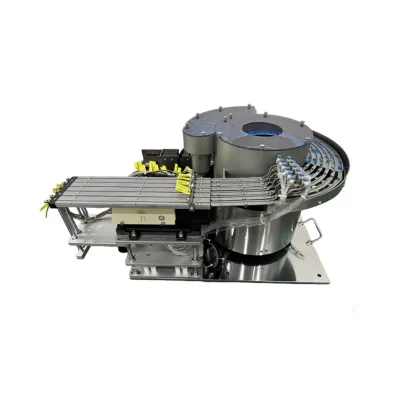
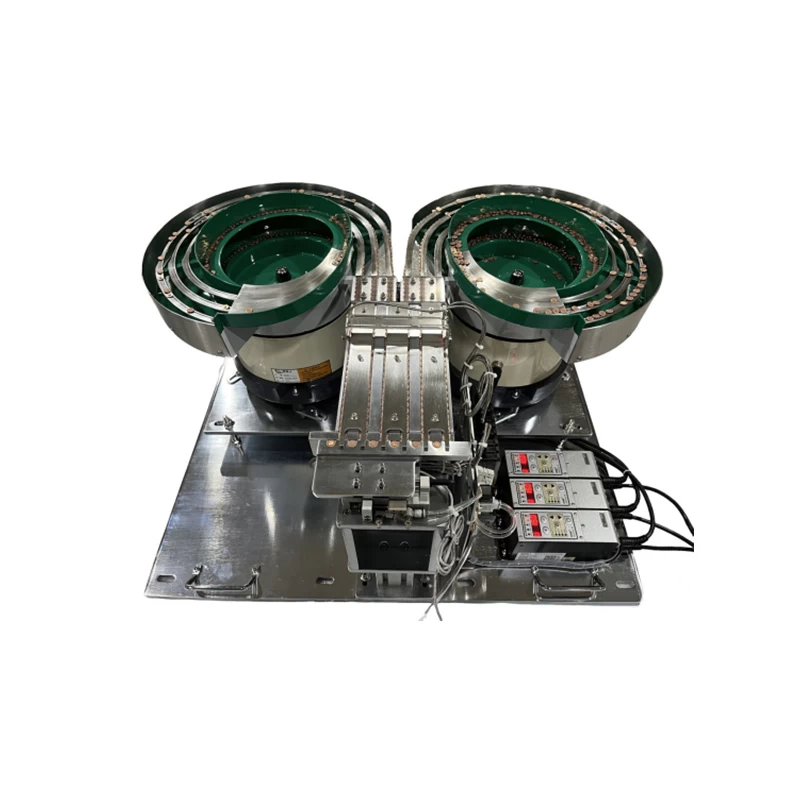
Vibratory Feeders for the Automotive Components and New Energy Lithium Battery Industries
Tạo mã QR
-
Worldwide dellvery avallable
We offer EPP foam RC fixed-wing gliders, specifically designed for stable and effortless flight. These lightweight gliders are suitable for beginners and hobbyists alike, offering smooth soaring and reliable performance. We provide a range of durable, easy-to-assemble models that are perfect for recreational flying and outdoor leisure.
Product description
Vibratory feeders serve as the core feeding equipment for automated production lines within the automotive components and new energy lithium-ion battery sectors. By transforming disordered materials into an ordered stream through precise directional feeding, these units work in tandem with robotic manipulators to execute high-speed, high-precision material picking and transfer operations. This integration achieves full-process automation—encompassing feeding, picking, and loading—and is specifically tailored to meet the high-cycle, high-precision, and 24/7 continuous production demands characteristic of automotive and lithium-ion battery manufacturing lines. Fundamentally, this solution resolves critical issues associated with manual handling, such as low efficiency, poor accuracy, and the risk of scratching or damaging delicate parts.
Core Interconnection Logic
The vibratory feeder sorts and conveys materials to a designated, precise picking position (located via photoelectric or fiber-optic sensors) → The sensor transmits a signal to the PLC or robotic control system → The robotic manipulator moves along a pre-programmed path to the picking position → The end-effector gripper on the robot secures the material → The material is transferred to the designated processing, assembly, or inspection station → The cycle repeats, thereby establishing a closed-loop signal exchange and synchronized motion between the feeding and picking operations.
Core Interconnection Logic
The vibratory feeder sorts and conveys materials to a designated, precise picking position (located via photoelectric or fiber-optic sensors) → The sensor transmits a signal to the PLC or robotic control system → The robotic manipulator moves along a pre-programmed path to the picking position → The end-effector gripper on the robot secures the material → The material is transferred to the designated processing, assembly, or inspection station → The cycle repeats, thereby establishing a closed-loop signal exchange and synchronized motion between the feeding and picking operations.